
White Plains City Directory Shelf
White Plains city directories survive in several overlapping collections, not in one uninterrupted run. The most precise film list is the New York State Library list. White Plains Public Library, usually called WPPL, supplies a broader local run with gaps and a house-history method. National Archives material helps define the scope of several late-1920s and early-1930s volumes. County Archives maps and atlases then help locate an address that appears in a directory. Use the exact year printed in the source when recording a result.
| Collection | Years | Where Held | Access |
|---|---|---|---|
| White Plains city-directory microfilm | 1903/04–1908/09; 1910; 1911; 1913–1916/17; 1919; 1921–1929; 1930–1932 | New York State Library | Non-circulating film |
| WPPL directory and house-history collection | 1888–1967, with gaps | White Plains Public Library Local History | Local research collection |
| White Plains directories with nearby places | 1928–1932 | National Archives availability guide | Holding-location lead |
| Historic maps, atlases, and photographs | Collection-specific dates | Westchester County Archives Digital Collections | Free online collection |
The State Library list omits 1909, 1912, 1917–18, and 1920. Those gaps do not prove that a person left White Plains. Check the immediately available years, then use census, deed, newspaper, or map evidence to test the change.
White Plains Directory Film Years
The New York State Library city-directory list is the best starting point for a requested film year. Its White Plains entry is deliberately uneven: 1903/04 through 1908/09, then 1910 and 1911, 1913 through 1916/17, 1919, 1921 through 1929, and 1930 through 1932. Write down the year before asking staff for film. That avoids converting a listed gap into an assumed annual publication run.
The State Library’s film is non-circulating, so it is an access lead rather than a download promise. A researcher who cannot use the film should ask WPPL about its local holdings and use the National Archives directory notice to identify another holding route. The page image below records the State Library entry used for this White Plains directory trail.
The New York State Library’s city-directory listing identifies the White Plains microfilm years.
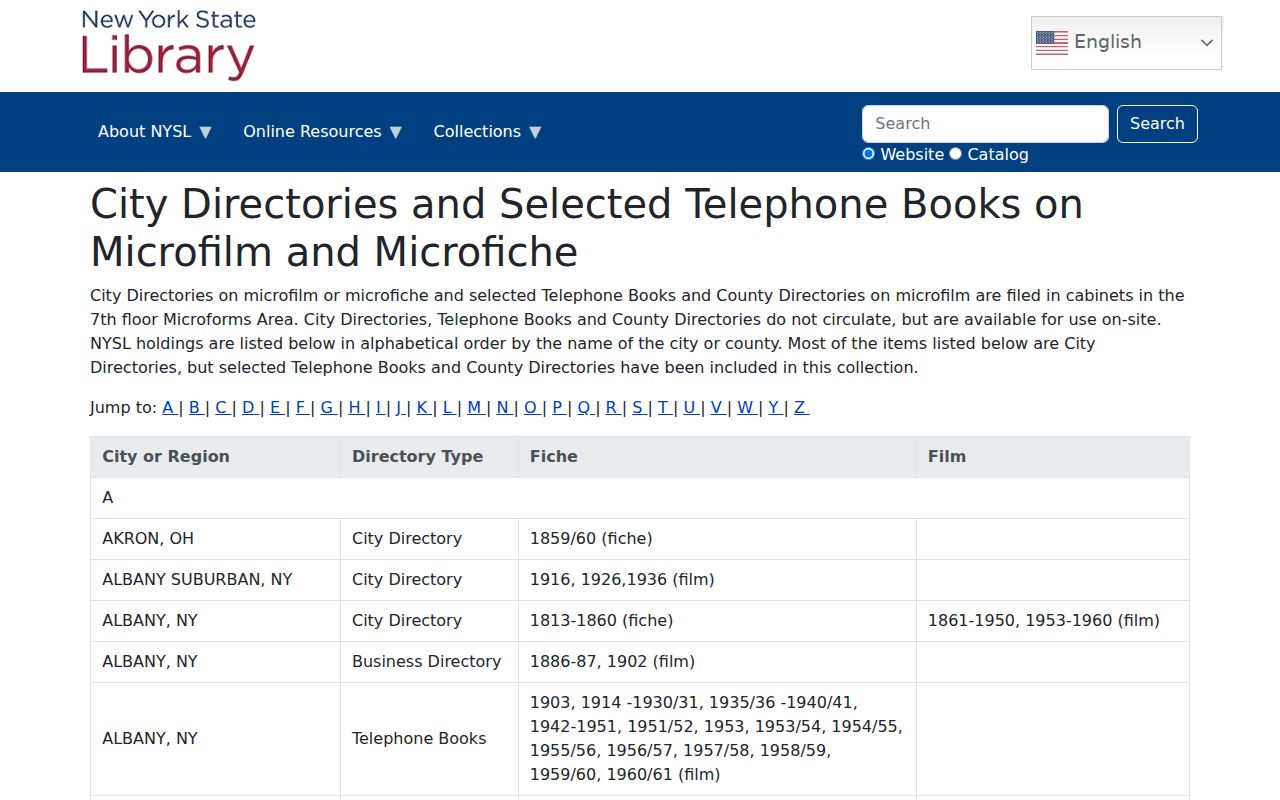
Use that listing to request a listed volume or adjacent year, rather than assuming a missing year is available elsewhere in the same format.
- 1888: WPPL’s documented local directory run begins, with gaps.
- 1891/92: WPPL identifies a Turner directory example.
- 1903/04: the State Library’s listed White Plains film sequence begins.
- 1930: WPPL identifies a Polk example and the verified start of reverse searching.
- 1967: WPPL’s documented local run ends, still with gaps.
White Plains Directory Research Room
WPPL Local History at 100 Martine Avenue is the local counterpart to the State Library film. Its holdings include books, photographs, maps, oral histories, pamphlets, clippings, and ephemera about White Plains and nearby Westchester communities. The genealogy material adds census rolls, published records, narrative histories, indexes, and on-site Ancestry Library Edition. The library also reports public microfilm viewing and scanning in its Local History Room.
WPPL’s house-history guidance reports a city-directory run from 1888 to 1967, with gaps. It identifies a Turner example from 1891/92 and Polk examples from 1930 and 1963. These are useful signposts, not a claim that every year or every page has the same fields. A 2025 addition gives visitors using a free FamilySearch account access to more than five billion FamilySearch images on site, subject to item-level rights.
White Plains Public Library Local History is the source for this research-room view.
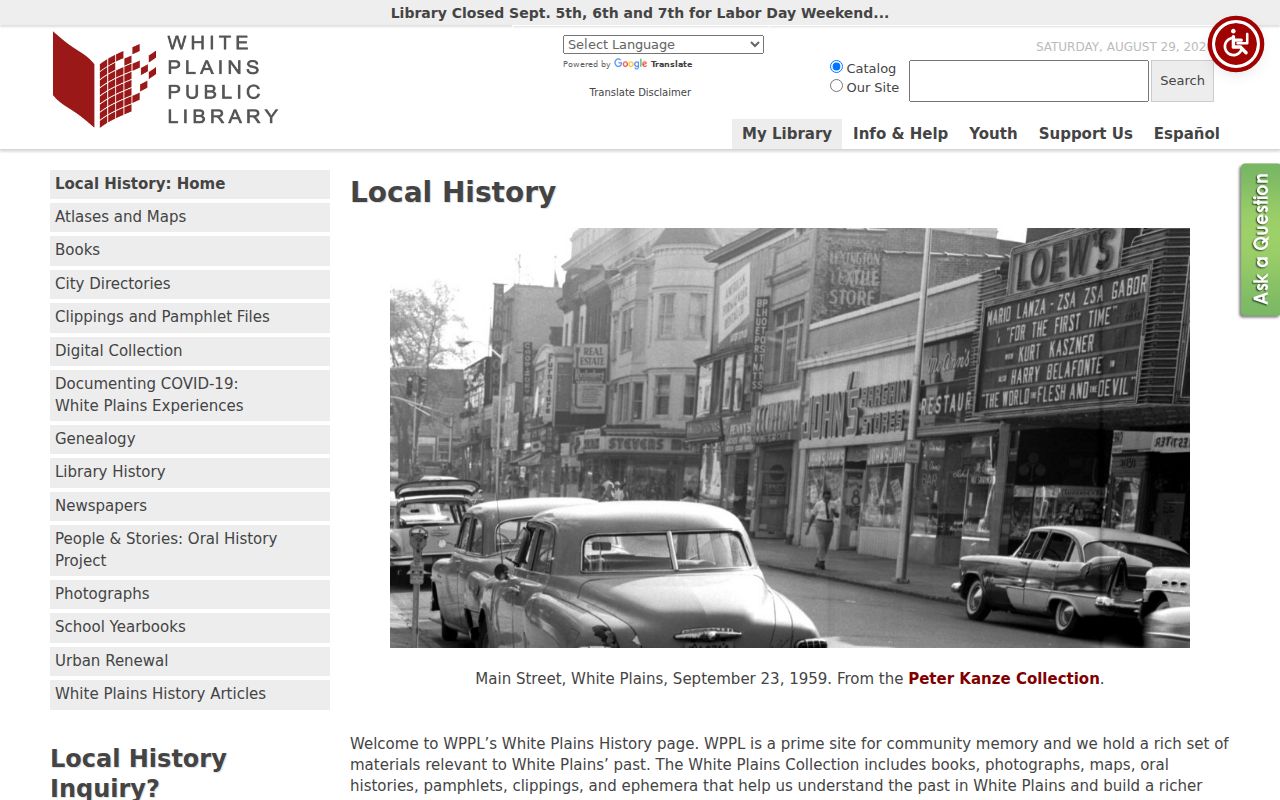
Local History is especially useful when a film year, address, map, or surname needs staff-assisted context rather than a broad web search.
The White Plains Historical Society, based at the Jacob Purdy House, is another local inquiry route. Its public information establishes a location and contact path, but a researcher should confirm a specific archival series before treating it as a searchable directory collection.
The Historical Society’s public contact page documents that local context route.
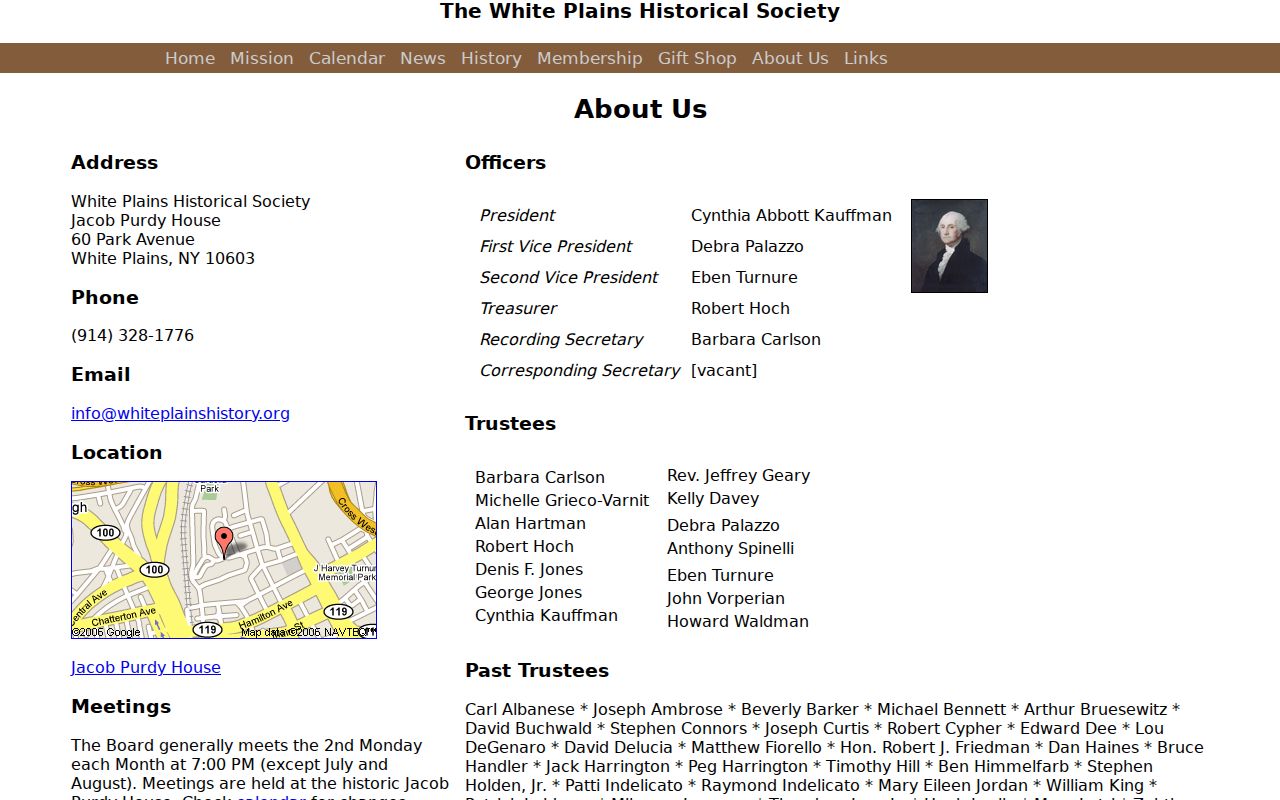
That distinction keeps a historical inquiry honest: a valuable local contact is not automatically a claim that a named household appears in its files.
White Plains Directory Place Names
A White Plains directory title can cover more ground than the City limits. The National Archives availability guide identifies 1928–1932 White Plains material that includes Elmsford, Hartsdale, and Scarsdale. Read the subtitle, district heading, and address as printed before calling an entry a City of White Plains record. A White Plains mailing label or library shelf label is not enough by itself.
This wider coverage is understandable in a railroad-corridor area, but the date still matters. Compare the street, municipality, and volume subtitle before merging a household trail. For a current parcel question, the city assessment roll and County map provide a better municipal check than a historic directory heading.
Note: Record the book’s subtitle and the address exactly as printed before linking a White Plains directory entry to a city parcel.
Decode a White Plains City Directory
A directory entry is evidence for the year of that volume, not a complete profile. The name section may pair a name with an address and can include an occupation, business address, spouse or widow notation, depending on the publisher and year. WPPL publishes a native image from a Polk’s White Plains City Directory entry dated 1930. Transcribe what that specific page prints, then keep the page and volume details with the note.
| Name | Spelling as printed, including initials or name variants. |
|---|---|
| Address | The street and number printed for that directory year. |
| Occupation | A role or trade only when the entry actually includes one. |
| Spouse or widow notation | A relationship clue that needs comparison with other records. |
| Business address | A separate location when the exact entry prints one. |
- Criss-cross directory
- The street-order part of a later directory, used to locate entries by address instead of by name.
- Householder index
- A name-based portion of a volume that points to a listed household or address.
- Abbreviation key
- The explanation printed in the exact volume for its shortened words and marks. Photograph or note it before expanding an abbreviation.
WPPL’s 1930 Polk directory-entry image supplies the visual example.

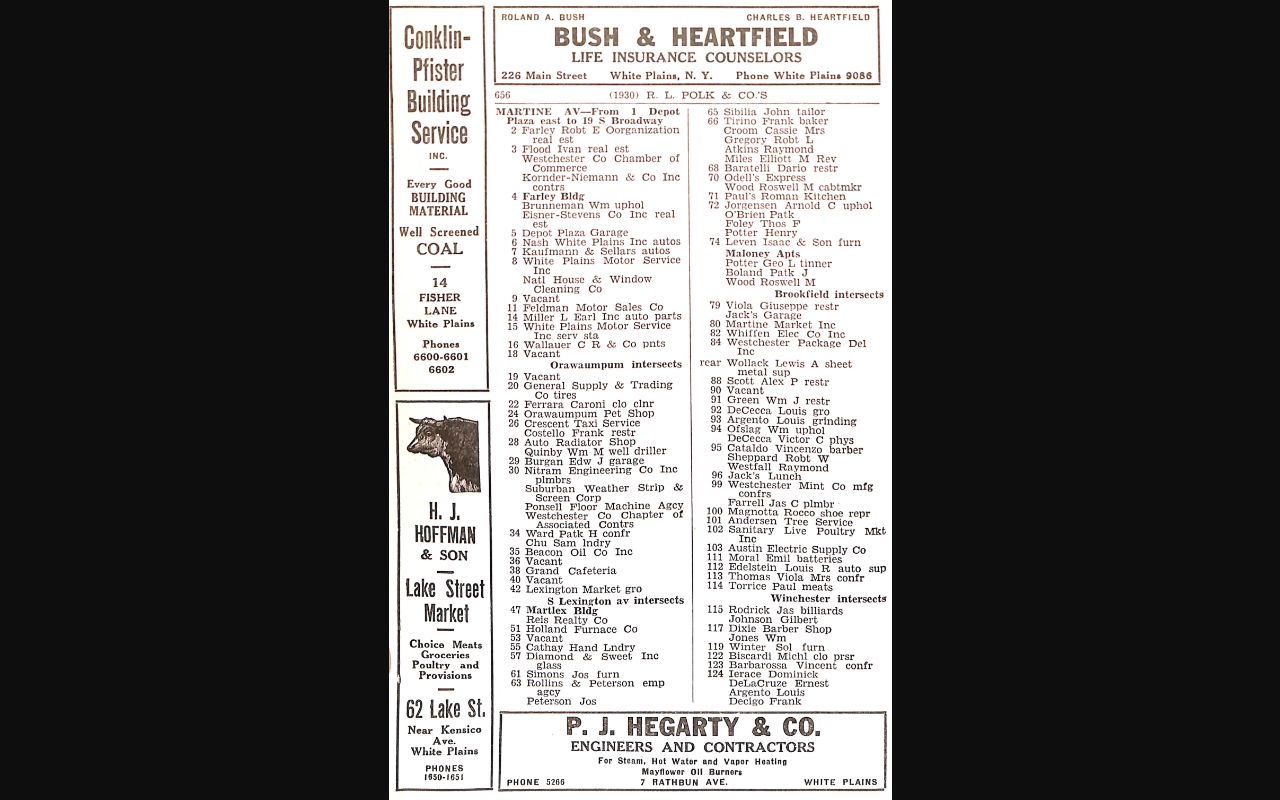
The image is a prompt to read the original page closely, not a reason to assign an unverified publisher-wide abbreviation rule to every White Plains volume.
White Plains Reverse Directories
WPPL identifies 1930 as the verified point where reverse address searching begins in its local material. That makes a later criss-cross section useful for asking which listing appears at a known address. It does not turn the result into proof of a current occupant or prove every person connected with the address. Earlier work usually starts from the name section and uses maps, deeds, and census schedules to test the location.
The 1930 boundary is a practical comparison point. A researcher with an address from 1929 should not expect the same reverse method that works for 1930. When the target is an address rather than a name, use the 1930-or-later reverse section if present, then use the City assessment and County Clerk records separately for a current title question.
Trace White Plains City Directory Years
Family-history work is strongest when it treats each directory as a dated checkpoint. Begin with the exact name spelling and first available year. Continue through the next listed volumes, noting changes in address or notation. Then pair a directory year with the closest released federal census schedule. Federal census releases reach 1950 as of this research date, and the National Archives uses a 72-year access practice.
- Find the earliest available White Plains directory entry and transcribe it exactly.
- Check the preceding and following available directory years, including the documented gaps.
- For 1930 and later, inspect a reverse section when the exact volume provides one.
- Pair 1910, 1920, 1930, 1940, or 1950 directory-era work with the matching released census.
- Use a newspaper finding aid, probate reference, or deed chain to test a move, death, or address change.
A name disappearing can mean a move, a death, a changed spelling, a non-listed person, or a gap in the surviving run. Treat it as a lead. The city-directory collections themselves give historical household clues; the modern address record chain belongs with the White Plains streets lookup.
White Plains Directory Map Context
Maps test the physical setting of an old address. The Library of Congress 1911 White Plains Sanborn set has 65 sheets. It can show a building footprint, construction or use context, nearby streets, and the surrounding block. It does not identify residents. The collection has a later 1930 volume cataloged with 91 sheets and eight skeleton maps, but that volume is not online.
County Archives Digital Collections add the 1867 Atlas of Westchester County, the 1910–11 atlas, photographs, and White Plains geographic tags. Cite the particular item or sheet used. Do not impose a modern parcel boundary backward onto a historic atlas. Railroad Avenue became Main Street, and Village Street became Broadway, so an old entry may need its legal description, SBL, filed map, or cross streets to bridge those documented aliases.
Westchester County Archives Digital Collections is the source for the archive map and image route.
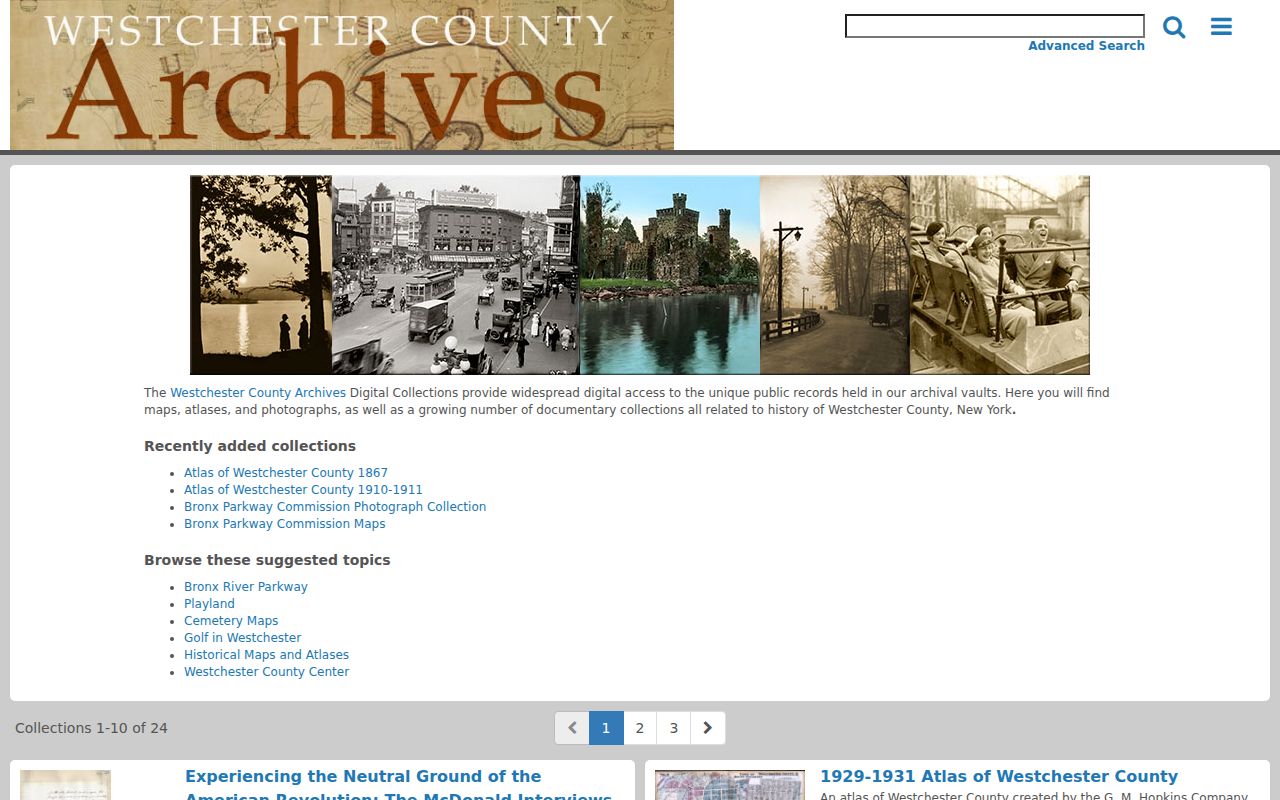
Map context can confirm a street’s historical setting, but it should never be used to invent a householder name or an unverified address renumbering.
White Plains City Directory Access
There is no single online White Plains city directory search covering every year. The usable access chain is the State Library’s non-circulating film for its listed years, WPPL’s Local History and house-history resources, National Archives holding guidance, and County Archives digital map collections. For city-government archives, the City Clerk manages the City Archives and says digital conversion is ongoing. A blank general search does not show that a record group is absent.
Ask for a bounded item: an exact directory year, surname, address, map sheet, department, or record group. That makes it possible for library or archives staff to explain what can be inspected, copied, or researched. It also preserves the difference between a directory listing, a map reference, a recorded deed, and a present-day address fact.
Note: A specific year, subtitle, and source citation make a historical directory finding much easier to verify later.